Southwest Michigan Wine Portal
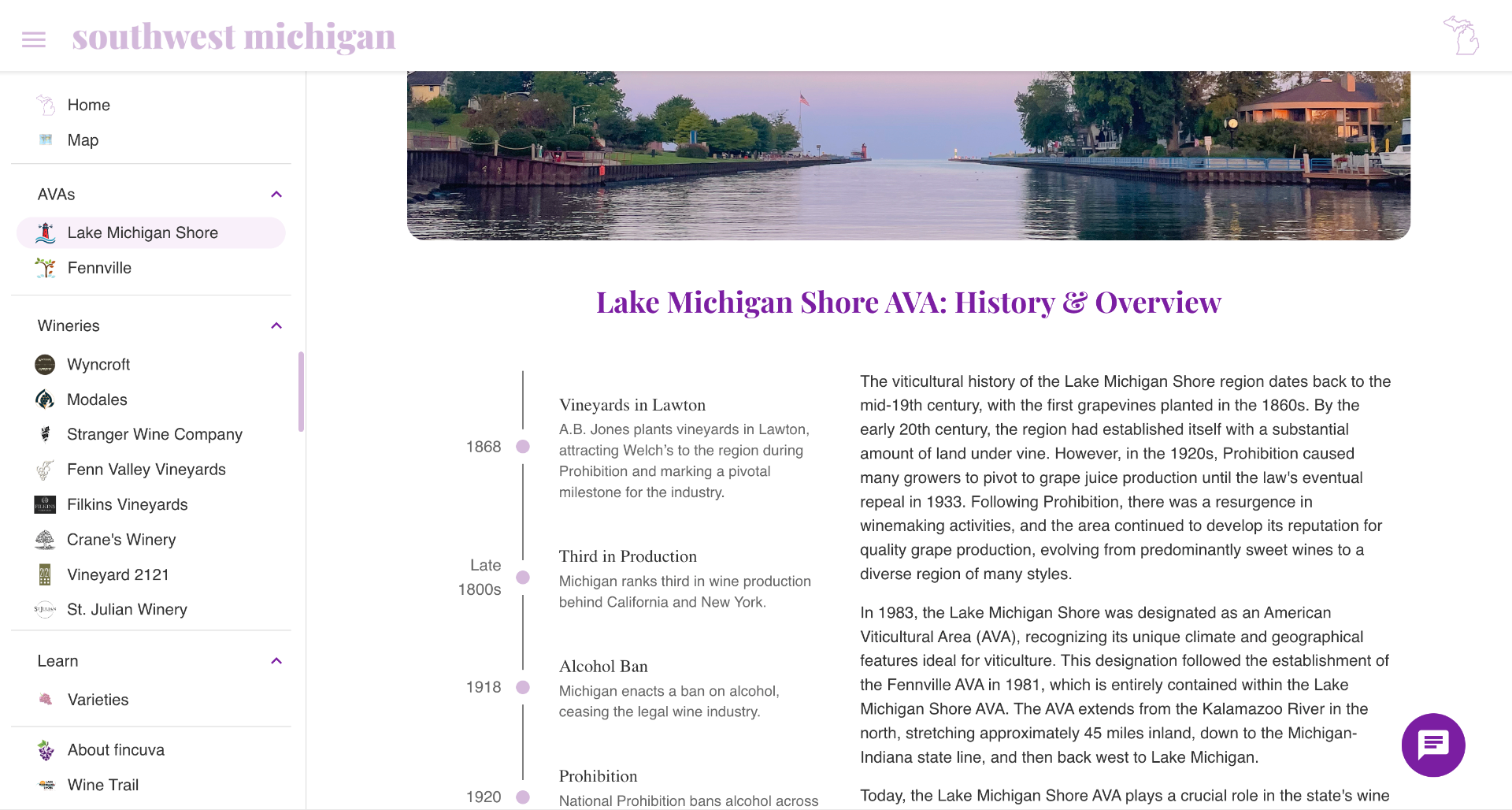
A web application dedicated to the Lake Michigan Shore and Fennville American Viticultural Areas in Southwest Michigan. Built for wine enthusiasts and tourists, it brings together interactive maps, a winery database, grape variety encyclopedia, and regional history in one place.
With a deep family history in Van Buren County, this project is a personal tribute to the region's viticultural heritage. Built with React, Google Maps API, and D3.js for data visualizations.
Built with
What the portal offers
Interactive AVA Map
Custom-styled Google Maps layer showing the Lake Michigan Shore and Fennville AVA boundaries with vineyard locations. Users can explore the geographical features — lake effect, soil types, elevation — that make this region suitable for viticulture.
Winery Database
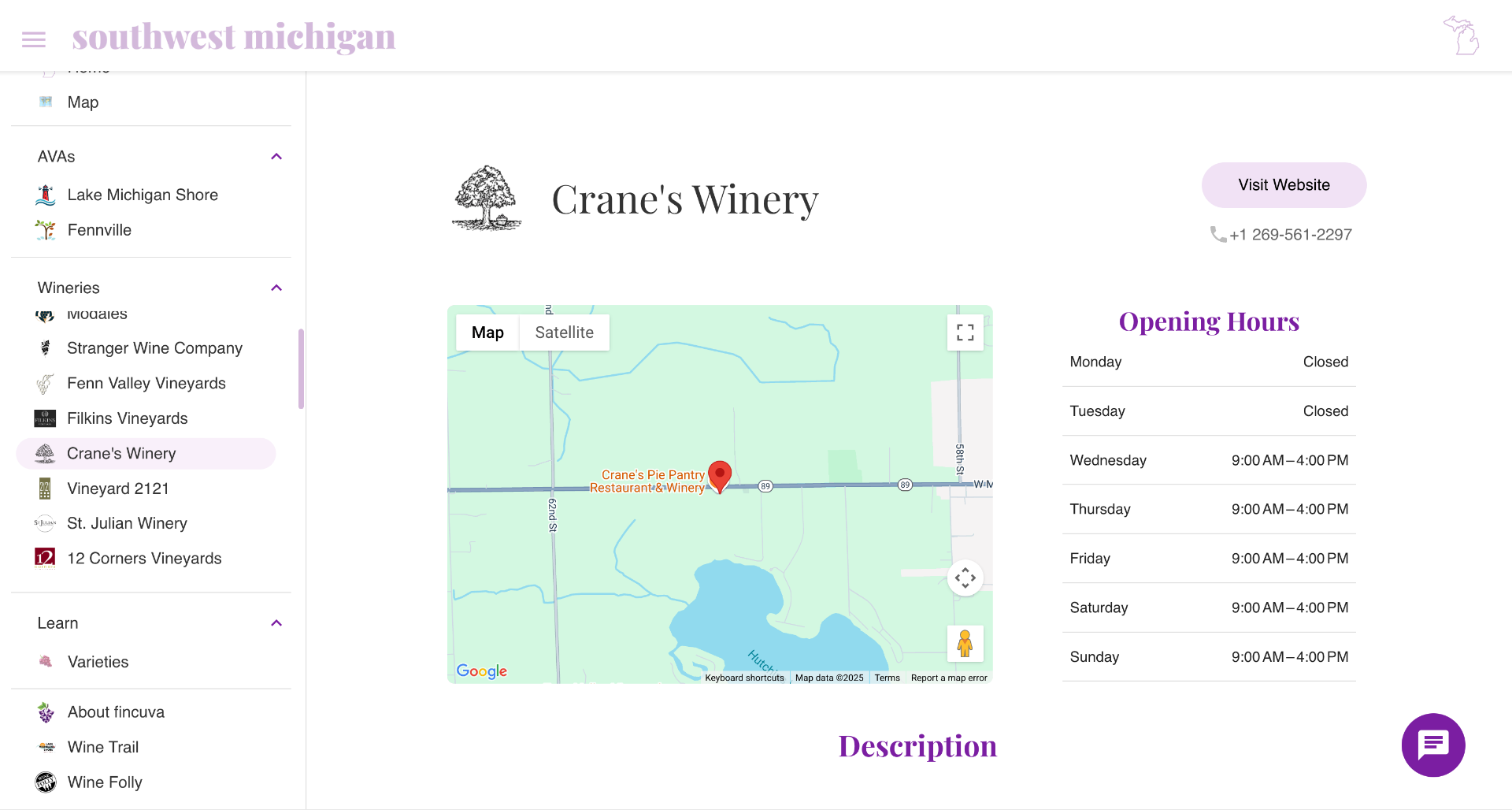
Profiles for local wineries with location, hours, specialty wines, and history. Integrated with the map so visitors can plan tasting routes by proximity.
Grape Variety Encyclopedia
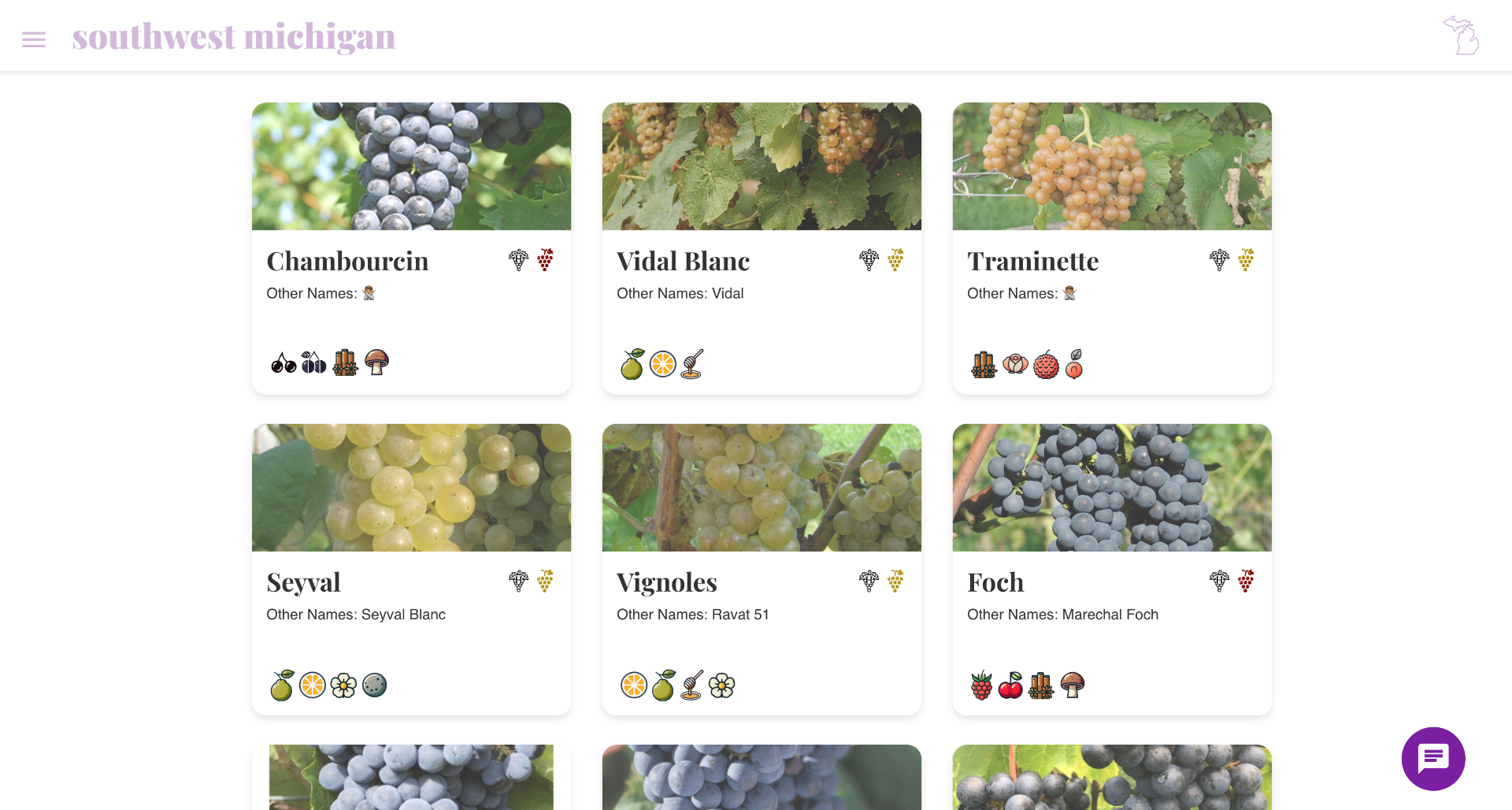
Hybrid and vinifera varieties grown in the region, with characteristics, flavor profiles, and the wine styles each produces. Searchable via Fuse.js fuzzy matching.
A note on the chatbot
The portal originally launched in 2023 with a custom AI chatbot powered by OpenAI's API and Fuse.js fuzzy search. The idea was to let visitors ask natural-language questions — "what wineries are open on Sundays?" or "which grapes grow best near the lake?" — and get curated answers drawn from the portal's own database.
After two years of user feedback and informal A/B testing, the chatbot consistently underperformed expectations. Users who engaged with it spent less time on the rest of the portal. Most questions it handled well — winery hours, directions, variety recommendations — were already answered more efficiently by the map and database pages themselves. The chatbot created a second, slower path to the same information, and its presence on the page competed for attention with the content users actually came for.
The feature still exists in the codebase but is no longer a focal point of the experience. The takeaway is straightforward: a chatbot wrapper around a small, well-structured dataset rarely adds value over good navigation and search. The underlying data is what matters.
This may be worth considering for small wineries evaluating paid chatbot add-ons for their websites. If your content is already organized and searchable, a conversational layer may not improve the visitor experience — and the cost of maintaining it (API fees, prompt tuning, hallucination monitoring) often exceeds the benefit.
Explore the region
Visit the portal to discover Southwest Michigan's wine culture, plan a tasting tour, or explore local grape varieties.